Archive Research: How to Start Working With Sources
Archive research today often begins at a computer instead of in the reading room. A good example is Archivportal-D, which belongs to the German Digital Library. It offers a shared point of access to information about archives and holdings in Germany. It was presented to the public in September 2014 at the 84th German Archive Day. How do you prepare for research so that you do not waste time on needless searching? This article explains what to watch for when working with archive holdings and how to record your finds in the files.
What Is Archive Research?
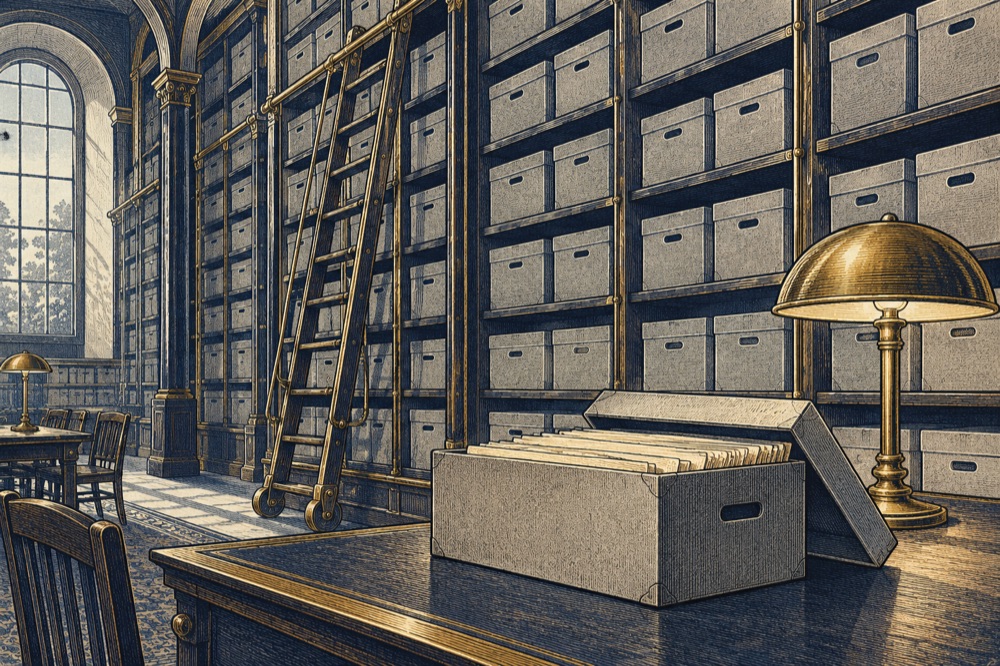
Archive research means looking for information on a given subject in files and other archive documents. The aim is to find primary sources on which you can base your own findings.
Primary sources include letters, official records and parish registers. Secondary sources, by contrast, are accounts in which others evaluate and interpret those documents. The two kinds of source complement each other: an account makes it easier to get started, because it explains connections. The primary sources show what that account is based on. With this background knowledge you can put concrete questions to the files and more easily see which holdings you really need.
How Do You Prepare for an Archive Visit?
The first step happens at home. City and state archives increasingly put lists of their holdings online. It pays to go through the available overviews before you travel and to narrow down the holdings that might matter. For research in German holdings, the Archivportal-D mentioned above is helpful, as it gathers information about archives in one place.
Next, check the rules of use and the opening hours. Each archive sets these itself. What applies in one place may be handled differently elsewhere. Access to the files also depends on the individual institution. Read the notes on the archive's website or ask the staff directly. That way you avoid standing in front of a locked door.
How Do You Record Where You Found Things?
For notes taken in the archive, accuracy counts above all. Always write down the call number of the document so that you can find it again later.
Without a call number, even a revealing find is hard to document. It also costs time to search for the same file a second time. While taking notes, separate transcriptions from the document from your own conclusions. That makes the later write-up easier, as well as any return to the source. Also note which archive and which collection the document came from. With complete details, others can check your finds against the same files. They help you too when you come back to them after a few weeks.
How Do You Plan the First Steps?
Start by defining your topic clearly. Then look over the holdings overviews and the rules of use of the archive you chose, and think about how you want to record your notes along with call numbers. This approach creates order and helps you make good use of your time in the reading room. Archive research takes patience. With careful planning, though, you gain a sturdy base of sources for the work ahead. You will find more guidance in the other articles of this guide.