Emigration in Nonfiction: Why Stories of Departure Still Grip Us
Emigration is a subject readers like to come back to, because it links personal fates with large-scale history. What makes tales of leaving home so gripping? The weight of the departure is decisive. Whoever emigrates leaves behind a home, a familiar language and known faces in order to start over in another country. This text shows where the power of such stories lies and how the history of emigration can be placed in context.
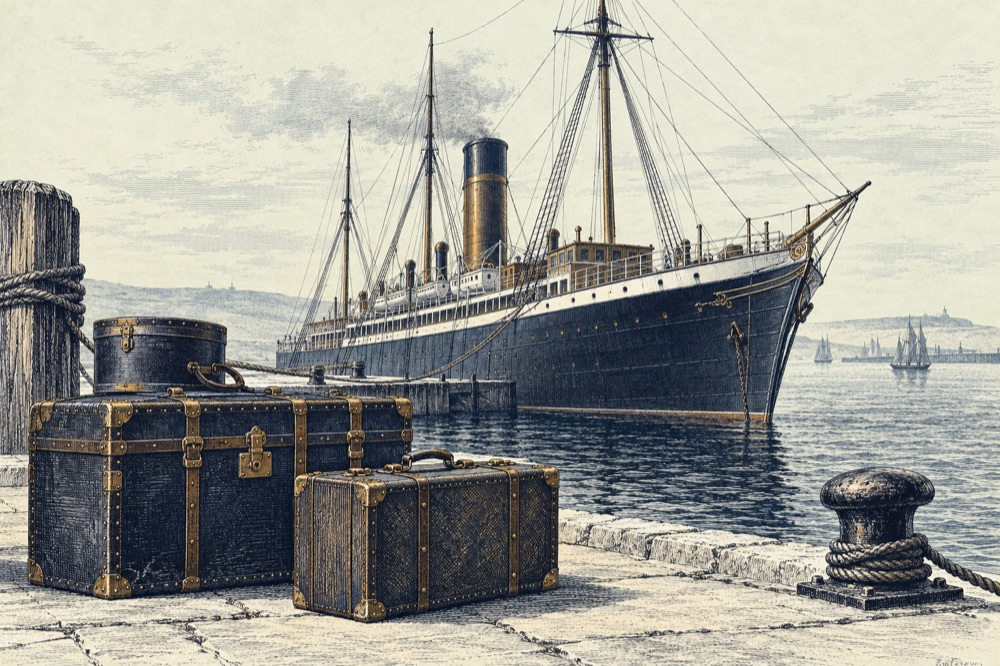
Emigration, Family and Era in One Story
Books about emigration often set family histories within the larger context of their time. They tell of a personal departure just as much as of the political and economic events that led to it. At the center is a decision that changed a family's life. In this way, emigration stories open up eras that we otherwise know only from textbooks and dates.
Looking at a family also makes motives understandable that vanish behind the statistics in broader surveys. Fear, hope and responsibility for relatives take on concrete form. Emigration then appears as a human experience and loses its abstract character.
The Forty-Eighters and Emigrants From Germany
One vivid example is emigration from Germany to the United States. After the revolution of 1848 and 1849, some of the German participants left their homeland and went to the United States. They are known as the Forty-Eighters. Among them were many journalists, teachers, lawyers and artists.
It is worth keeping the scale in view. The Federal Agency for Civic Education (bpb) puts the number of political refugees in the narrow sense among the emigrants of 1848 to 1860 at between four and ten thousand. According to the bpb, most emigrated for economic reasons. The gap between the handed-down picture and the real proportions shows why a book on emigration should keep political and economic motives apart. As you read, you can watch whether the author makes this distinction.
A Museum That Complements Your Reading
The history of emigration can also be explored beyond books. The German Emigration Center in Bremerhaven opened on August 8, 2005, and is regarded as the first migration museum in Germany. It focuses mainly on journeys across the ocean, especially to the United States. Readers of nonfiction will find it a vivid companion to their reading and can better picture the settings described in the books.
Why Does Emigration Still Work in Nonfiction?
The strength of such books is that they let readers experience large-scale history through the lives of individuals. Beyond dates and statistics, they offer a look at one's own roots and show that leaving could be both a choice and a necessity. Personal fates and understandable motives make migration history stick in the memory. If the subject interests you, pick a book that joins family stories with the background of the era. While reading, check how its conclusions fit the findings of historical scholarship. Enjoy the read.